Home/Why it's hot
31° Why it's hot
Built to keep heat in.
Brilliant in January.
Most British homes were designed around one problem: staying warm. Insulation, double glazing and draught-proofing all do their job in both directions, which is why the house that is cosy in winter is an oven by the second week of July.
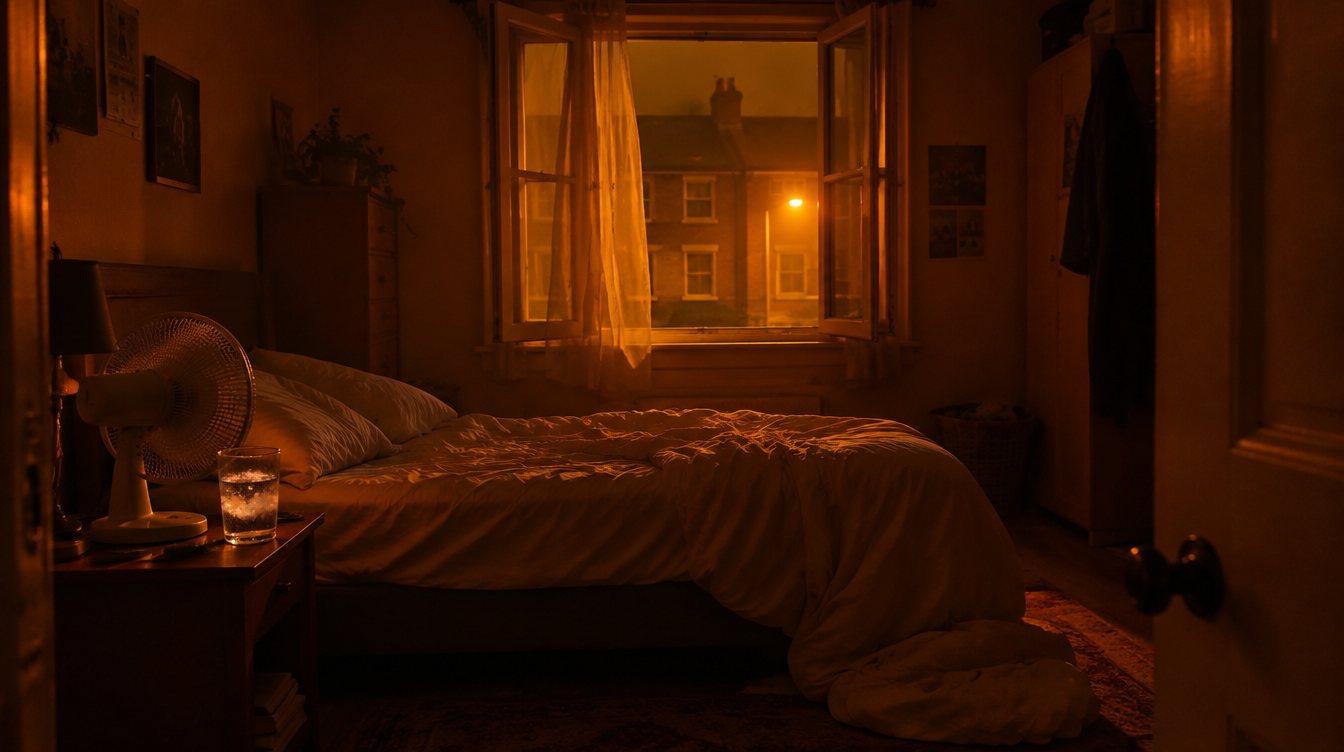
30° Six reasons
Why the house holds on to heat.
Glass is a one-way door
Sunlight passes through a window as light and lands on the floor, the bed and the walls as heat. The glass then holds most of that heat in. A south or west-facing window takes the sun all afternoon, which is exactly when the outside air is hottest too.
Heat rises and stays risen
Warm air climbs through the house and collects under the roof. Loft rooms and top-floor bedrooms sit above everything the house has absorbed all day, and they are the last rooms to cool at night.
Insulation works both ways
A well-insulated house loses heat slowly in winter. In summer it gains heat slowly too, but once it has warmed up it holds on to it. By late July the walls themselves are warm, and they keep giving that heat back all night.
The night does not help as much as it used to
A house cools at night only when the outside air is cooler than the inside. On a run of hot days the overnight low stays high, so each day starts warmer than the last.
A fan moves hot air about
Moving air feels cooler on your skin because it helps sweat evaporate, but the room stays the same temperature. Run a fan in an empty room and nothing changes. A fan plus air conditioning is a good pairing; a fan on its own is a feeling, not a fix.
Opening the window at 2 am
By 2 am the outside air may be a little cooler, but the window also lets in traffic, foxes and the neighbour's party, and the next morning the sun comes straight back in. The cooling you get is slow and small.
29° How cooling works
It doesn't make cold.
It moves heat outside.
An air conditioning unit is a heat pump. It picks heat up in the room and drops it off outside, round and round, using a refrigerant that boils at a very low temperature.
Indoor coil
Room air is drawn through a cold coil. The refrigerant inside boils, soaking up heat from the air, and the air goes back into the room cooler and drier.
Compressor
The outdoor unit squeezes the refrigerant gas. Compressing it makes it hot, hotter than the air outside.
Outdoor coil
The fan on the outdoor unit blows outside air across the hot coil. The heat leaves the refrigerant and goes into the garden.
Back again
The refrigerant drops in pressure, turns cold, and heads back indoors for more. In winter the whole cycle runs in reverse to heat the room.
28° The rooms that suffer
Where it bites hardest.
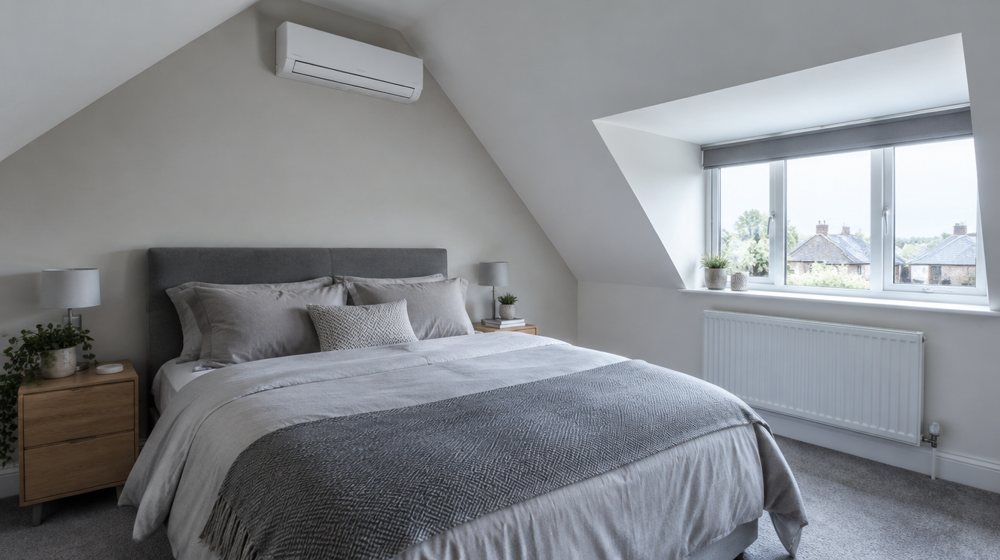
The hottest room in most houses
A loft conversion sits above everything else, usually with a big roof window facing the sun and a sloping ceiling that puts the insulation close to your head. Once it is hot it stays hot. A single wall-mounted unit on the gable wall cools it in minutes.
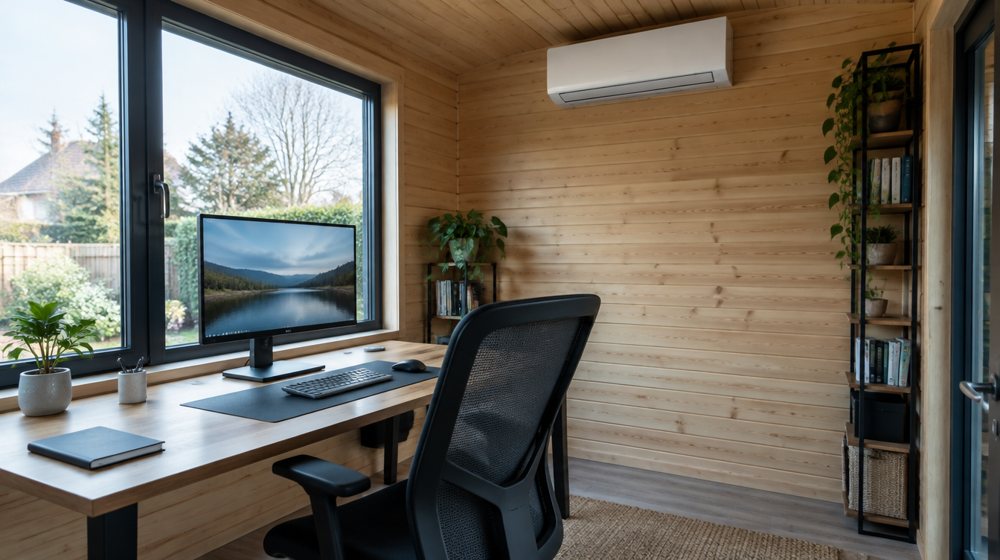
Too hot in July, too cold in January
Timber garden rooms have very little thermal mass, so they heat up fast in the morning sun and lose heat fast in winter. A small unit that cools in summer and heats in winter is the single most useful thing you can add to one.
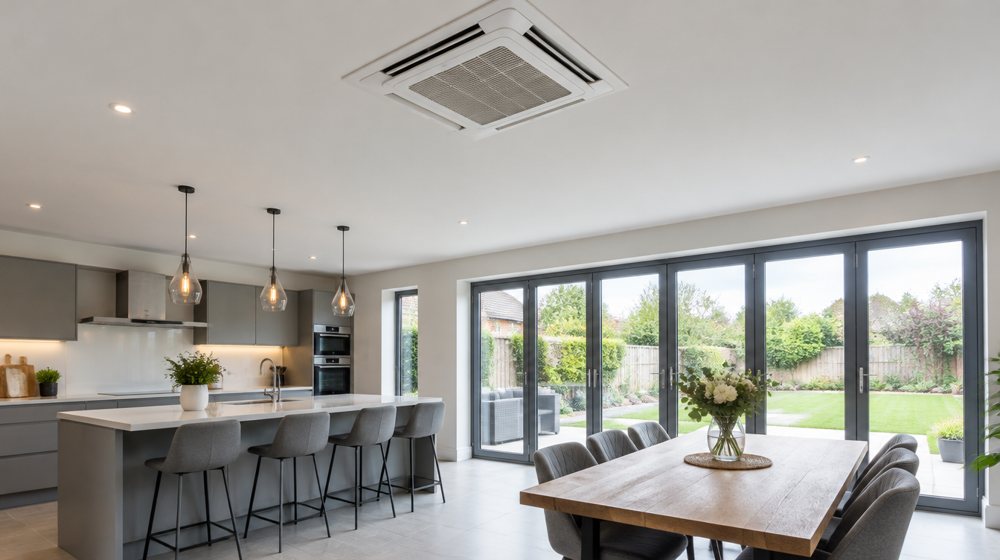
Glass on three sides, cooker on the fourth
Big bi-fold doors and roof lights make a lovely room and a greenhouse. Add the oven and the hob and the room runs warm all year. A ceiling cassette set into the ceiling void cools the whole space evenly with nothing on the walls.
Not sure which room is the problem?
The survey is free. We measure the room, check which way the glass faces and tell you what would work, and what would not.
27° Straight answers
Things people ask us.
Would better blinds or external shading fix it?+
They help, and we will say so at the survey. External shading stops heat before it gets through the glass, which is far better than a blind on the inside. But shading only slows the gain; it does not remove heat that is already in the room, and it does nothing on a humid night. Air conditioning is the only thing that actually takes heat out of the house.
Does air conditioning dry the air out?+
It takes some moisture out as it cools, which on a sticky British summer night is most of the comfort. Rooms do not end up uncomfortably dry at normal settings.
Is it bad for the environment?+
Every system we fit is an inverter heat pump. In summer it moves heat out of the room; in winter it moves heat in, delivering around three units of heat for each unit of electricity, so it is one of the lowest-carbon ways to heat a room. The refrigerant is handled by F-Gas registered engineers and recovered, never vented.
What about a portable unit?+
A portable unit pumps hot air out through a hose in an open window, and the open window lets warm air straight back in. They are noisy, they work hard and they rarely get a room much below the outside temperature. A fitted split unit is quieter, several times more efficient and cools the room properly.

26° Let's get you here
Free survey.
Fixed quote.
Cool by the weekend.
- A free home survey, usually within a few days.
- A written, fixed quote the same day as the survey.
- Most single rooms fitted and commissioned in one visit.
- Our own engineers, F-Gas registered, no subcontractors.
It answers day and night and can talk you through what would suit the room.